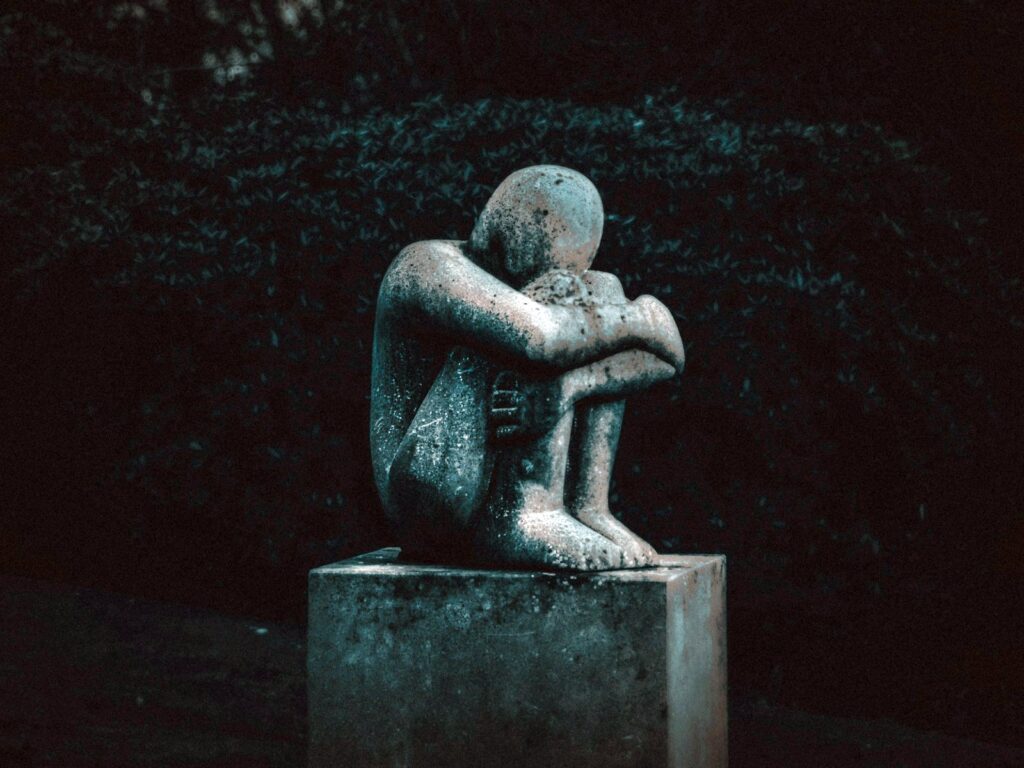
Understanding Trauma and Grief
When therapists talk about trauma, they often refer to the terms ‘big T trauma’ and ‘little t trauma’. ‘Big T’ trauma refers to more visible types of trauma, such as abuse, while ‘little t’ trauma refers to less visible types, such as neglect. Similarly, the experience of grief is sometimes categorized as ‘big G grief’ and ‘little g grief.’
‘Big G’ and ‘little g’ Grief
‘Big G’ grief refers to major losses having a significant impact on a person’s life. Examples of ‘Big G’ grief include losing a family member or close friend, the end of a marriage or long-term relationship, serious illness or injury, major disasters, or other life-altering events. On the other hand, ‘little g’ grief refers to smaller losses that are often dismissed or minimized but still hurt emotionally. Examples of ‘little g’ grief could include moving away from home, graduating from school or college, changing a job, a home sports team losing the game, and so on.
Growing Attention to Grief
In my earlier post on grief, I highlighted the central role of grief in traditional systems in dealing with mental health and illness, which seems under-appreciated in the field at present. However, there has been some recent interest in the idea of working through grief. For instance, Anderson Cooper, a CNN anchor, had a popular podcast that talked about his personal experiences with grief [1]. Cooper discussed the work of a grief expert, Francis Weller, author of the book, Wild Edge of Sorrow: The Sacred Work of Grief [2]. Weller includes a profound list of areas of grief in the book, which he calls the “five gates of grief,” which are deep and meaningful areas of exploration for anyone. We are talking more about grief, even with children. For example, Sesame Street shared a video of Elmo and actor Andrew Garfield talking about his grief last year [3]. However, in many of these recent explorations of grief, there is more of a focus on ‘Big G’ grief and less on the ‘little g’ grief.
Grief in Traditional Systems
Traditional systems, like Buddhism, have long included both types of grief in their teachings. The Dukkhatā Sutta from the original 5th century B.C., Pali canon of Buddha’s teachings, further clarifies the concept of dukkha, which is the first of the Four Noble Truths [4]. This text describes three types of dukkha or grief:
- Dukkha-dukkha – generally understood as the grief of losses.
- Viparinama-dukkha – generally understood as the grief that comes from changes.
- Sankhara-dukkha – generally understood as the grief of conditioned states of being.
Leaving aside the third type of grief (sankhara-dukkha) for another time, we can see that the first two types of grief overlap with the ideas of ‘Big G’ grief (dukkha-dukkha) and ‘little g’ grief (viparinama-dukkha). The distinction between these categories, in both the Western and Eastern systems, might not be as neat and perfect as we would like. It can help to imagine a wide range of grief experiences, from minor changes, like finishing the last episode of an exciting TV show, to major life-changing events, with the dividing line somewhat open to interpretation for each person.
Highlighting ‘little g’ Grief
In my clinical work, I often highlight the presence of the ‘little g’ grief reactions, as much as we work through the ‘Big G’ grief experiences. There are many ‘a-ha’ moments when someone realizes that the thing to do with the ‘little g’ grief is the same thing they have already done, or are doing, with the ‘Big g’ grief – grieve it by working through it. In future posts, I will highlight the strategies from the ancient systems of wisdom for doing just that.
References:
- Cooper, A. (Host). (2022–present). All There Is with Anderson Cooper [Audio podcast]. CNN Audio. https://www.cnn.com/audio/podcasts/all-there-is
- Weller, F. (2015). The wild edge of sorrow: Rituals of renewal and the sacred work of grief. North Atlantic Books.
- Sesame Workshop. (2024, October 18). Andrew Garfield and Elmo explain grief [Video]. YouTube. https://www.youtube.com/watch?v=EVlXbiP4x2E&t=16s
- Bodhi, Bhikkhu. (trans.). (n.d.). SN 45.165: The Suffering (Dukkhatā Sutta). In Saṃyutta Nikāya 45: Magga Saṃyutta. SuttaCentral. Retrieved October 11, 2025, from https://suttacentral.net/sn45.165/en/bodhi?lang=en&reference=none&highlight=false